

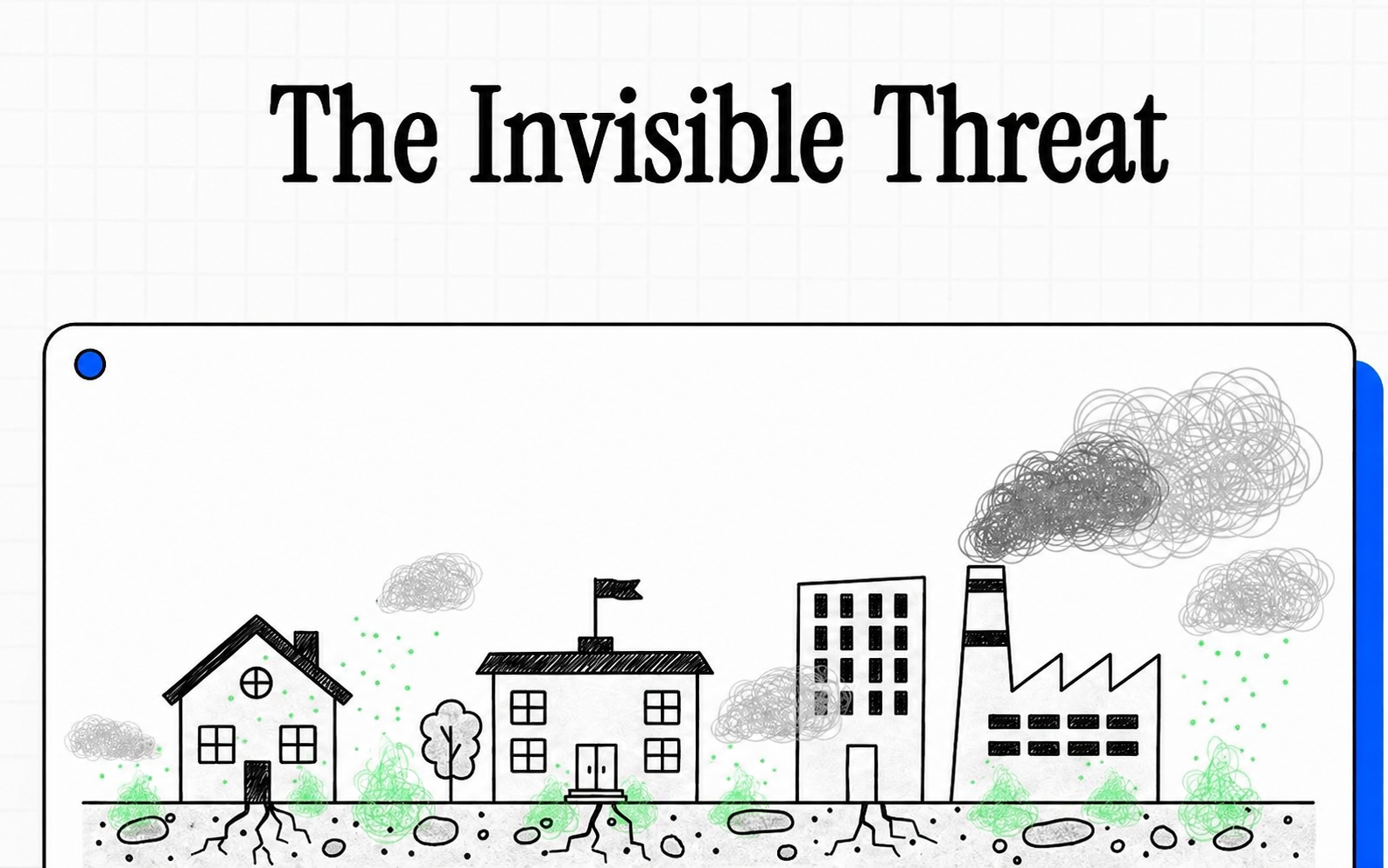
Radon is a naturally occurring radioactive gas, colorless and odorless, generated by the decay of uranium found in soil and rocks. Although imperceptible to human senses, its presence inside buildings represents one of the main challenges for indoor health and workplace safety.
Why is Radon a Health Risk?
Radon is classified as one of the leading causes of lung cancer. The health risk is significant: it is estimated that the probability of developing serious respiratory diseases increases by 16% for every 100 Bq/m³ rise in long-term exposure. Since indoor concentrations can easily exceed recommended limits without occupants being aware, prevention based on objective data is essential.
Regulatory Framework in Italy and Europe
To protect both the public and workers, authorities have established strict reference levels:
- European Directive (Euratom 2013/59): sets guidelines for radon levels, recommending safety thresholds to protect public health.
- Italian Legislation (Legislative Decrees 101/2020 and 203/2022): Italy has adopted EU directives by defining precise limits for annual average radon concentration:
- 300 Bq/m³ for existing buildings
- 200 Bq/m³ for new constructions (a limit that will become even more relevant from 2025)
Additionally, the National Radon Action Plan 2023–2032 outlines measurement and mitigation strategies, making monitoring mandatory in public buildings, schools, workplaces, and areas identified as “high risk.”
The Importance of Continuous Monitoring
Radon concentration can vary depending on ventilation, building structure, and soil conditions. For this reason, measurement is the only reliable way to ensure safety.
Effective monitoring enables:
- Regulatory compliance: meeting legal limits and avoiding penalties
- Health protection: identifying critical areas requiring ventilation or mitigation measures
- Proactive management: addressing risks already during the design phase of new buildings
Monitoring indoor air quality is not only a regulatory requirement, but also a conscious decision to ensure the well-being of anyone living or working within a building.